Saturday, December 9, 2017

Session 13: Literature for a Diverse Society
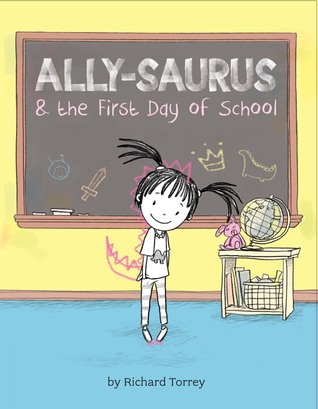


22608901


Grade level this book was selected for: Kindergarten


APA Citation: Torrey, R. (2015). Ally-saurus & the first day of school. New York, NY: Sterling Children's Books.


Description: "You can call her Ally-SAURUS! When Ally roars off to her first day at school, she hopes she'll meet lots of other dinosaur-mad kids in class. Instead, she's the only one chomping her food with fierce dino teeth and drawing dinosaurs on her nameplate. Even worse, a group of would-be "princesses" snubs her! Will Ally ever make new friends? With its humorous art, appealing heroine, and surprise ending, this fun picture book celebrates children's boundless imagination." Retrieved from Amazon.com on December 6, 2017: https://www.amazon.com/Ally-saurus-First-School-Richard-Torrey/dp/1454911794/


This book is appropriate for: Ages 0-8; Pre-Kindergarten-Second grade


Justification: I would read this book as part of a story time presentation and then have kiddos name the author/illustrator and define the role of each in telling the story that demonstrates CCSS.ELA-Literacy.RL.K.6 With prompting and support, name the author and illustrator of a story and define the role of each in telling the story. (English Language Arts Standards >> Reading: Literature, Retrieved from Common Core State Standard Initiatives on December 6, 2017: http://www.corestandards.org/ELA-Literacy/RL/K/6/ (links to an external site.) Links to an external site.


Keywords: School🏫Friends👫Individuality🌈Imagination


Scholarly Review: "It's the first day of school, and Ally—or Ally-saurus as she likes to be called—wonders if there will be "other dinosaurs" in her grade? She is one of many spirited children in her class, and while Ally is obsessed with dinosaurs, each child has his or her own passion. During recess, Ally is faced with dragons, pirates, astronauts, lions, and, of course, know-it-all princesses. In the end, the school librarian is credited with expanding Ally's imagination. Torrey has captured the concerns that come with the first day of school. Beautiful black-and-white drawings highlight each child's imagination with color. Imparting the lesson that everyone has their own personality and can still be themselves and make friends, this story is worth the read. However, it may be a little long for the intended audience. VERDICT This book can easily be used in classrooms in September to relieve the anxiety that children might feel at the beginning of the school year." —Betsy Davison
Citation: Davison, B. (2015, August). Torrey, Richard. Ally-saurus & the first day of school. School Library Journal, 61(8), 61. Retrieved from http://www.slj.com/2015/08/collection-development/its-back-to-school-stories-to-share/.

Session 12: Informational Books


22540206


Grade level this book was selected for: Kindergarten


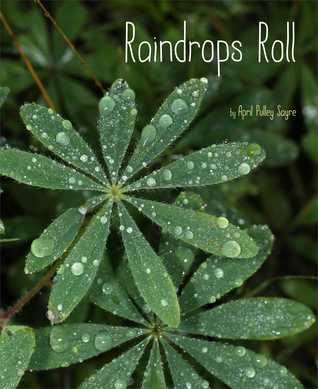
APA Citation: Sayre, A.P. (2015). Raindrops Roll. New York, NY: Beach Lane Books.


Description: "Discover the wonder of water in this refreshingly fun and fascinating exploration of rain, raindrops, and the water cycle from the creator of Rah, Rah, Radishes! and Go, Go Grapes!


Raindrops drop. They plop. They patter. They spatter. And in the process, they make the whole world feel fresh and new and clean.

In this gorgeously photo-illustrated nonfiction picture book, celebrated author April Pulley Sayre sheds new light on the wonders of rain, from the beauty of a raindrop balanced on a leaf to the amazing, never-ending water cycle that keeps our planet in perfect ecological balance." Retrieved from Amazon.com on December 6, 2017: https://www.amazon.com/Raindrops-Roll-April-Pulley-Sayre/dp/148142064X (Links to an external site.) Links to an external site.


This book is appropriate for: Ages 0-8: Kindergarten-Second grade


Justification: I would read this book as part of a story time presentation and then have students engage in a question and answer activity about water and specifically rain that demonstrates CCSS.ELA-Literacy.RL.K.1 With promting and support, asl and answer questions about key details in a text. (English Language Arts Standards >> Reading: Literature, Retrieved from Common Core Stadard Initiatives on December 6, 2017: http:// www.corestandards.org/ELA-Literacy/RL/K/1/ (Links to an external site.) Links to an external site.


Keywords: Hydrologic cycle🌧Nonfiction🌧Water🌧Photographic


Scholarly Review: This first-rate book highlights the beauty and wonder of rain—a seemingly commonplace occurrence—and shows its effects upon the rest of the natural world. In general but lyrical terms, the work explains what raindrops do ("Raindrops settle. They slip. They dot."). The text is accompanied by scenes from a forest rainforest (drops clinging to flowers or spider webs, insects and birds dealing with the downpour). Sayre has created a poetic atmosphere, using rhyming words ("Raindrop spangles/mark angles."), and her vibrant, close-up photographs, which effectively complement the narrative and will engage children and adults alike. The last two spread, titled "A Splash of Science," offer information on the three forms of water (ice, liquid water, and water vapor) and their characteristics. This attractive work is also ideal for read-alouds and an easy entry for students delving into nonfiction reading, especially in poetry or science units. This excellent title will transform how readers think about rain.—Tracey Wong, P.S. 54/Fordham Bedford Academy, Bronx, NY --Tracey Wong (Reviewed November 1, 2014) (School Library Journal, vol 60, issue 11, p131)
Citation: Wong, T. (2014, November). Sayre, April Pulley. Raindrops Roll. School Library Journal, 60(11), 131. Retrieved from http://www.slj.com/2014/11/reviews/multimedia/november-starred-reviews/#_

Friday, November 3, 2017


Session 11: Historical Fiction & Biographical Fiction


Grade level this book was selected for: Kindergarten


APA Citation: Cullen, L. (2015.) Dear Mr. Washington. New York, NY: Dial Books.


Description: In April 1796, young Charlotte Stuart writes a series of letters to George Washington, whose portrait is being painted by her father, reporting on her efforts and those of her brothers to follow the rules of good behavior in the book Mr. Washington gave them. Includes historical notes. (From the books title page.)


This book is appropriate for: Ages 0-8; Kindergarten-Fourth grade


Justification: I would read this book as part of a story time presentation. I would have listeners identify characters, settings, and major events in the story demonstrating CCSS.ELA-Literacy.RL.K.3 With prompting and support, identify characters, settings, and major events in a story. (English Language Arts Standards >> Reading: Literature, Retrieved from Common Core State Standard Initiatives on November 3, 2017: http://www.commoncorestandards.org/ELA-Literacy/RL/K/3/ (Links to an external site.) Links to an external site.


Keywords: Letters📜History📜Siblings📜Etiquette


Scholarly Review: Gilbert Stuart, George Washington's portraitist, had 12 children and fretted about his famous subject's unsmiling mien. These details inspire Cullen's story of three rambunctious siblings: Charlotte, James and Baby John Stuart.Charlotte, a budding artist herself, writes three letters to "Mr . Washington " in April 1796. Her polite, guileless accounts belie the household mayhem that Carpenter's lively ink-and-wash illustrations depict. Charlotte's first missive thanks Washington for sending an etiquette book; she pledges to copy it out, just as Washington had done as a boy. Indeed, Cullen adapts the historical book Rules of Civility & Decent Behavior in Company and Conversation for the 10 proscriptions that Charlotte lists out. Covering both the usual (eating) and the quaint (the polite way to dispatch fleas, lice and ticks on oneself and others), the rules are comically illustrated as paintings on canvas, presumably done by Charlotte herself. She confides, "In no time I am sure James and I will have learned all these Rules. I hope so, for Mother says until then we get no Pudding after dinner." Subsequent letters recount both good behavior (which induces sleep in both the children and Washington , scuttling one sitting) and chaos, with an overturned punch bowl engendering a cascade of events culminating in a smile from George and the completion of Stuart's portrait. This collaboration's clever epistolary narrative and playful pictures present a fresh, remarkably humanizing view of our first president. 
Citation: Kirkus Reviews. (2014). [Review of Dear Mr. Washington by L.Cullen]. Kirkus Reviews. Retrieved from: https://www.kirkusreviews.com/book-reviews/lynn-cullen/dear-mr-washington/ (Links to an external site.) Links to an external site.

Session 10: Realistic Fiction


Grade Level this book was selected for: Kindergarten


APA Citation: Reynolds, P. (2004). Ish. Somerville, MA: Candlewick Press.


Description: Ramon loses confidence in his ability to draw, but his sister gives him a new perspective on things. (From the title page of the book.)


This book is appropriate for: Ages 0-8; Kindergarten-Third grade


Justification: I would read this book as part of a story time presentation and have students ask and answer questions about unknown words in the text demonstrating CCSS.ELA-Literacy.RL.K.4 Ask and answer questions about unknown words in a text. (english Language Arts Standards >> Reading: Literature, Retrieved from Common Core State Standard Initiatives on November 3, 2017: http://www.commoncorestandards.org/ELA-Literacy.RL.K.4/ (Links to an external site.) Links to an eternal site.


Keywords: Artist🖌Acceptance🖌Tolerance🖌Identity


Scholarly Review: Reynolds follows The Dot (Candlewick, 2003) with this companion story about creativity and the artistic process. Ramon loves to draw: "Anytime. Anything. Anywhere." When his older brother laughs at one of his pictures and points out that it does not look like a real vase of flowers, a dejected Ramon crumples up all of his efforts. However, he soon learns that his younger sister has hung the discarded papers on her bedroom walls. When he declares that the picture of the vase doesn't look like the real thing, she says that it looks "vase-ISH ." The child then begins to produce paintings that look "tree-ish ," "afternoon-ish ," and "silly-ish ." His "ish art" inspires him to look at all creative endeavors differently. The watercolor, ink, and tea illustrations have a childlike charm. Set against white backgrounds, the quirky line drawings and restrained use of color combine to create an attractive, unique picture book. The small size lends itself to one-on-one sharing and thoughtful examination. Ish , like Leo Lionni's Frederick (Knopf, 1967), encourages readers to see the world anew.–Shawn Brommer, South Central Library System, Madison, WI --Shawn Brommer
Citation: Brommer, S. (2005, January). Reynolds, Jason. ish. School Library Journal, 51(1), 97. Retrieved from: http://web.a.ebscohost.com/novp/detail?vid=14&sid=41817584-37ef-43c9-b7bd-4171b13dc85b%40sessionmgr4006&bdata=JnNpdGU9bm92cC1saXZl#UI=130375&db=neh(Links to an external site.) Links to an external site.

Session 9: Fantasy & Mystery


17263567

Grade level this book was selected for: Kindergarten


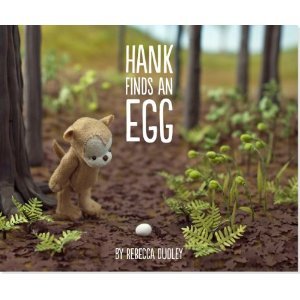
APA Citation: Dudley, R. (2013). Hank finds an egg. White Plains, NY: Peter Pauper Press.


Description: While walking through the forest, Hank finds an egg—all alone—on the forest ground. After spotting its home high up in a tree, he diligently tries to find a way to return it to its nest. First, he finds a tree stump—but it's too short. Next, he builds a ladder, but it's not tall enough. Dusk begins to fall, and he takes the egg home for safekeeping overnight. The next day—determined not to give up—Hank uses his ingenuity to come up with the perfect solution to see the egg safely reach home, and is joyfully rewarded with newfound forest friends! Hank's endearing and genuine kindness will inspire readers—young and old alike—to believe in themselves and in the goodness of others. (From the publisher.)


This book is appropriate for: Ages 0-8; Kindergarten-Second grade


Justification: Demonstrating CCSS.ELA-Literacy.RL.K.7 With prompting and support, describe the relationship between illustrations and the story in which they appear will be an excellent exercise with the photographed, hand-created scenes in this book. This wordless book would be great used to teach kiddos how to write dialogue or how to understand how stories are written by adding text to the pictures. Can also be used as a lesson in illustrations, the different ways in which artists tell stories. (English Language Arts Standards >> Reading: Literature, Retrieved from Common Core State Standard Initiatives on November 3, 2017: http://www.corestandards.org/ELA-Literacy/RL/K/7/ (links to an external site.) Links to an external site.


Keywords: Egg 🥚Kindness 😊Bear 🐻Wordless


Scholarly Review: This original picture book features a fresh look, an endearing main character, and a wordless story that speaks clearly to young children. Hank , a little animal, finds an egg on the forest floor and tries to return it to the nest overhead. He rolls a log to the tree and steps onto it, but he can’t reach the nest. He makes a ladder and climbs up, but the nest is still too high. After sleeping with the egg that night, Hank returns to the tree and sees a hummingbird. Carefully wrapping the egg in moss tied with ribbon, he offers it to the bird, who carries it to her nest. Hank keeps watch nearby until three little hummingbirds hatch and fly to him. Dudley creates and photographs wonderfully detailed, meticulously crafted dioramas. Changing character poses, settings, camera angles, focal points, and lighting contribute to the illustrations’ unusually strong sense of reality. This unassuming story holds great appeal for young children, who frequently find themselves too small to accomplish what they set out to do. Hank prevails through his creativity, his persistence, and his ability to work with another to solve a problem. A quietly magical little book to share, one on one, with a small child. -- Phelan, Carolyn 
Citation: Phelan, C. (2013, May). Dudley, Rebecca. Hank Finds an Egg. School Library Journal, 109(17), 78. Retrieved from: https://www.booklistonline.com/Hank-Finds-an-Egg-Rebecca-Dudley/pid=6034538

Session 8: Traditional Literature

4446809

Grade level this book was selected for: Kindergarten.


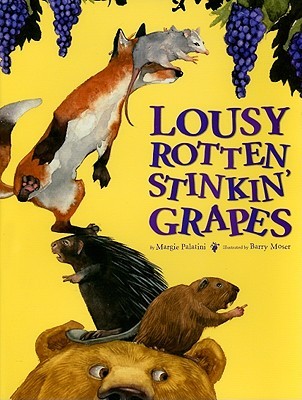
APA Citation: Palatini, M. (2009). Lousy rotten stinkin' grapes. New York, NY: Simon & Schuster.


Description: Retells the fable of a frustrated fox that, after many tries to reach a high bunch of grapes, decides they must be sour anyway. (From the book's title page.)


This book is appropriate for: Ages 0-8; Pre-Kindergarten-Third grade


Justification:Since this book is a laugh inducing retelling of a well known fable, and I would use it during story time to compare to the original tale that demonstrates CCSS.ELA-LITERACY.RL.K.2 With prompting and support, retell familiar stories, including key details.  The illustrations are beautiful and attention grabbing. The humor will keep kiddos entertained. Works as an excellent conversation starter about cooperation and problem solving. (English Language Arts Standards >> Reading: Literature, Retrieved from Common Core State Standard Initiatives on November 3, 2017: http: //www.corestandards.org/ELA-Literacy/RL/K/2/


Keywords: Cooperation🍇Problem solving🍇Arrogance🍇Animals


Scholarly Review: Palatini and Moser have taken a spare Aesop fable and expanded it into a riotous treat for eyes and ears while still keeping the essence of the original. Fox eyes the grapes hanging from a vine high in a tree and thinks that he can get them easily: “I am sly. Clever. Smart. After all, I am a fox.” So, armed with paper and pencil, he draws his Plan Alpha and tries it out–no grapes . He asks Bear to help him out with Plan Bravo and Bear starts to say something, but Fox interrupts: “Bear, Bear, Bear. …Your job is brawn. Not brain. You leave the thinking to me.” “If you say so,” says Bear. After the third, fourth, and fifth plans fail, involving Beaver, Porcupine, and Possum, Fox gives up and departs in disgust with the usual rationale: “lousy , rotten , stinkin ’ grapes .” “If you say so,” say the other animals as they feast on the fruit thrown down to them by Possum. Moser’s wonderful watercolor illustrations of the doubting animals executing Fox’s convoluted plans are rich in humor. They are silhouetted against plenty of white space, with the grapevines and tree dominating each large spread. Matched by a text that rolls off the tongue and is full of action and repetitive phrases, the book is a delight.–Judith Constantinides, formerly at East Baton Rouge Parish Main Library, LA --Judith Constantinides.
Citation: Constantinides, J. (2009, July). Palatini, Margie. Lousy Rotten Stinkin' Grapes. School Library Journal, 55(7), 73. Retrieved from: 


Thursday, November 2, 2017

Session 7: Poetry: Beyond the Ordinary


9762904


Grade level this book was selected for: Kindergarten


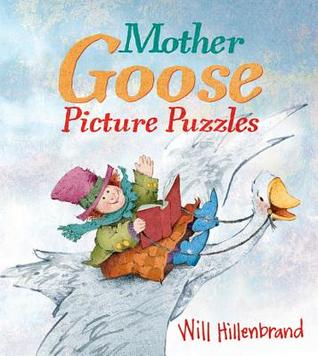
APA Citation: Hillenbrand, W. (2011). Mother Goose Picture Puzzles. Tarrytown, NY: Marshall Cavendish


Description: It's fun to see a picture and figure out the word it stands for. Some people call this kind of picture puzzle a rebus. Children will have fun guessing some of the words in twenty Mother Goose rhymes. It's not hard! There are clues on every page in Will Hillenbrand's sparkling, imaginative art. (From the book cover.)


This book is appropriate for: Ages 0-8; Pre-Kindergarten-First grade


Justification: As part of a story time this book would be a great example to use when discussing different types of texts that demonstrates CCSS.ELA-Literacy.RL.K.5 Recognize common types of texts (e.g., storybooks, poems). (English Language Arts Standards >> Reading: Literature, Retrieved from Common Core State Standard Initiatives on October 21, 2017: http://www.corestandards.org/ela-literacy/rl/k/5/ (links to an external site.) Links to an external site.


Keywords: Rhyme🥚Rebus🥚Classics🥚Clues


Scholarly Review: Perfect for sharing in storytimes or classrooms, this oversize picture book presents 20 rhymes in a rebus format. Each one is accompanied by a mixed-media illustration that contains larger, labeled versions of the characters or objects that appear in the rebus pictures. Some of the lesser-known objects have a brief explanation; for example, "crown" is defined as "another word for top of head." Most of the rhymes are well known, though a few may be new to children ("The Black Hen," "The Little Bird"). Hillenbrand's colorful artwork is bold and inviting, and his characters, engaging and expressive. The pictures lead the way through the book , giving readers a clue about what's to come. On the opening spread, the cat and the fiddle tag along as Mother Goose rides her gander, then the cat takes center stage in "Hey, Diddle, Diddle" on the next page, while Jack and Jill run to a well in the background. The clues continue throughout, supporting beginning readers and adding yet another guessing-game element to participative reading.—Kathleen Kelly MacMillan, Carroll County Public Library, MD --Kathleen Kelly MacMillan
Citation: MacMillan, K. (2011, April). Hillenbrand, Will. Mother Goose Picture Puzzles. School Library Journal, 57(4), 161. Retrieved from: http://www.slj.com/search-results/?q=Mother%20Goose%20Picture%20Puzzles&postTypes=post%2Cpage